
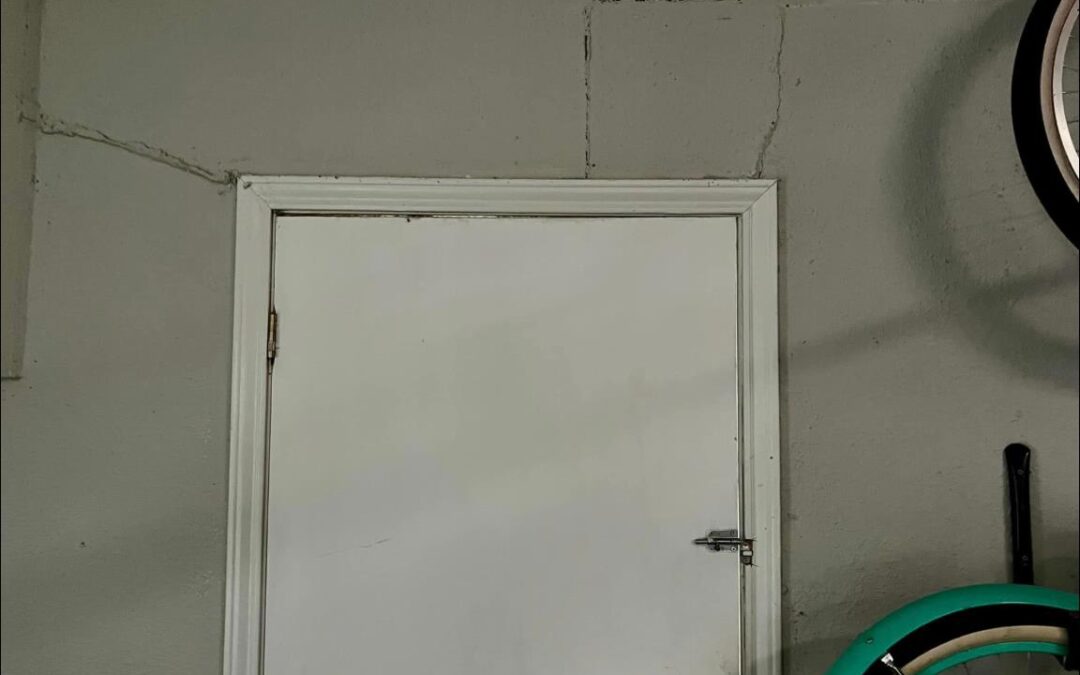
A crack by itself rarely tells you what caused it. The location, direction, and history of the crack matter, along with what else is changing around it. Start by identifying what has cracked and whether you can see movement over time.
Drywall, brick, and concrete tell different stories
- Drywall. A fine line along a taped seam can come from the finish. A diagonal crack at a door corner deserves a closer look when the door also begins to bind or nearby trim separates.
- Brick. Photograph stair-step cracks in mortar and cracks through the bricks. Note whether the masonry has shifted out of plane or pulled away from a window or opening.
- Concrete. Note whether the crack is in the floor, along an exposed slab edge, or in an exterior walkway. Photograph both sides if you can see them. A difference in height across the crack or a change over time is useful information for an evaluator.
Track the crack in context
Take one close photo with a ruler and one from far enough away to show nearby openings and corners. Save the date and repeat the photo from the same angle if the crack changes. Check the opposite side of the wall and the exterior near the same spot. Write down any floor slope, sticking doors, or plumbing leak you have noticed. Avoid relying on a single width measurement to decide what needs repair.
When to have someone look at it
Arrange an evaluation if cracks are growing, returning after repairs, appearing in several materials near one another, or accompanied by shifting floors or openings. If masonry is bulging or loose, keep clear of the area and get qualified help promptly.
For more on how foundation conditions are evaluated, see the ASCE Texas Section residential foundation guidelines. If you’re concerned about cracks in your home, see our foundation repair service or contact USA Foundation Repair.