
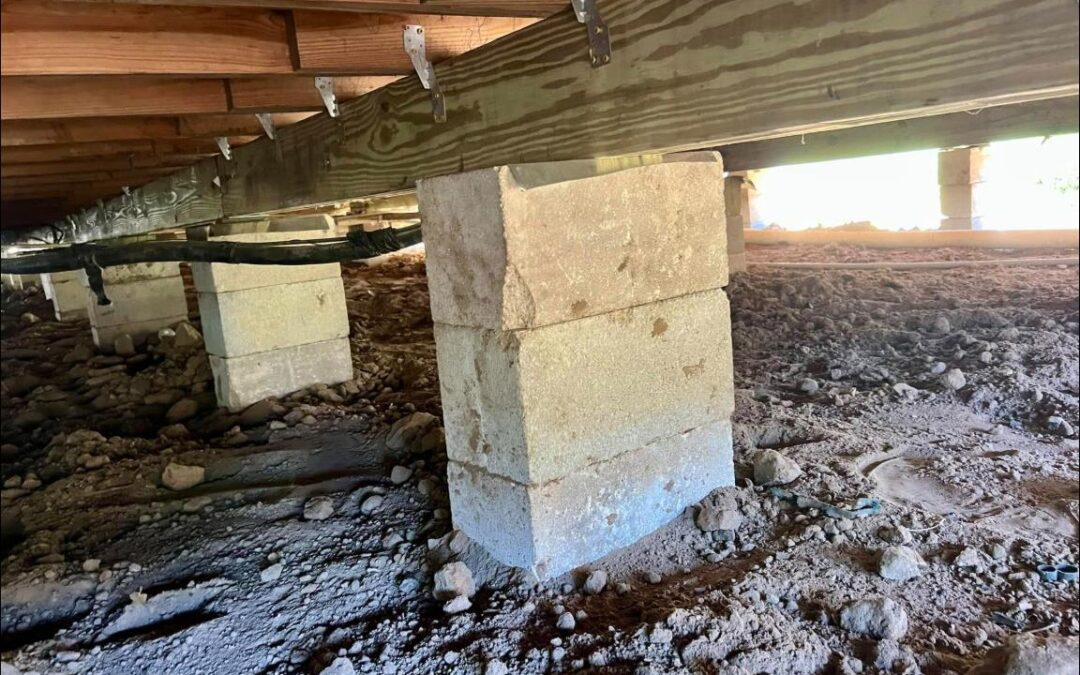
In a pier-and-beam house, the floor sits above a crawl space. Joists carry the floor, beams support the joists, and piers carry the beams. A change at any of those points can affect how the floor feels. Where you notice the problem helps guide the inspection.
Is it a soft spot, a dip, or movement underfoot?
- Soft spot. A small area that feels spongy, especially by a tub, toilet, or exterior door, can point to moisture damage in the subfloor or framing.
- Dip or slope. A low area that extends across a room or continues into another room can lead an inspector to check beam and pier support along that line.
- Bounce. A floor that flexes as you walk may need its joists, spans, connections, and supports checked. The amount of movement can vary depending on where you stand.
These patterns can overlap. A bath leak, for example, can damage the floor above and also leave moisture in the crawl space. Tell the inspector if a plumbing issue was repaired recently or if the problem changes after heavy rain.
What we look for under the house
Where the crawl space is accessible, an inspection can trace the affected area from the floor framing down to the supports. Relevant findings include deteriorated wood, shifted or inadequate supports, loose connections, damp conditions, and evidence of water entry. The scope of repair depends on what is causing the movement. Correcting moisture and replacing damaged material may be part of the job along with adjusting or repairing supports.
Before the visit, mark the area on a simple sketch and note which rooms or fixtures are nearby. If the floor feels unsafe, keep people off the affected area. Let the crew inspect the crawl space if access is tight, wet, or obstructed.
Learn more about pier and beam repair or contact USA Foundation Repair to discuss a floor that’s sagging or moving.